The Venture Catalyst Challenge (VCC), a competition for Imperial students, alumni, and early career researchers, offers a chance to develop ideas for commercialisation and win a share of a £100,000 prize fund. The competition has previously supported successful businesses such as seaweed-packaging company Notpla and battery engineering firm Breathe Battery.
Each year, VCC selects 25 teams for a three-month programme including coaching, expert meetings, and workshops. Five finalists are chosen to compete in the Grand Final for a top prize of £20,000, with additional prizes for category winners and those pushing innovation and societal impact.
Ben Mumby-Croft, Director of Entrepreneurship at Imperial, praised the finalists' ambition and resilience. He stated, “VCC is Imperial’s flagship entrepreneurship competition, with the biggest prize fund of any UK University, and it’s a brilliant opportunity to recognise and support the next generation of entrepreneurs.”
The Grand Final will take place at Imperial’s South Kensington Campus on Wednesday 4 November. Finalists are divided into five categories: AI & Robotics, Creative & Consumer, Digital & Finance, Energy & Environment, and Health & Wellbeing.
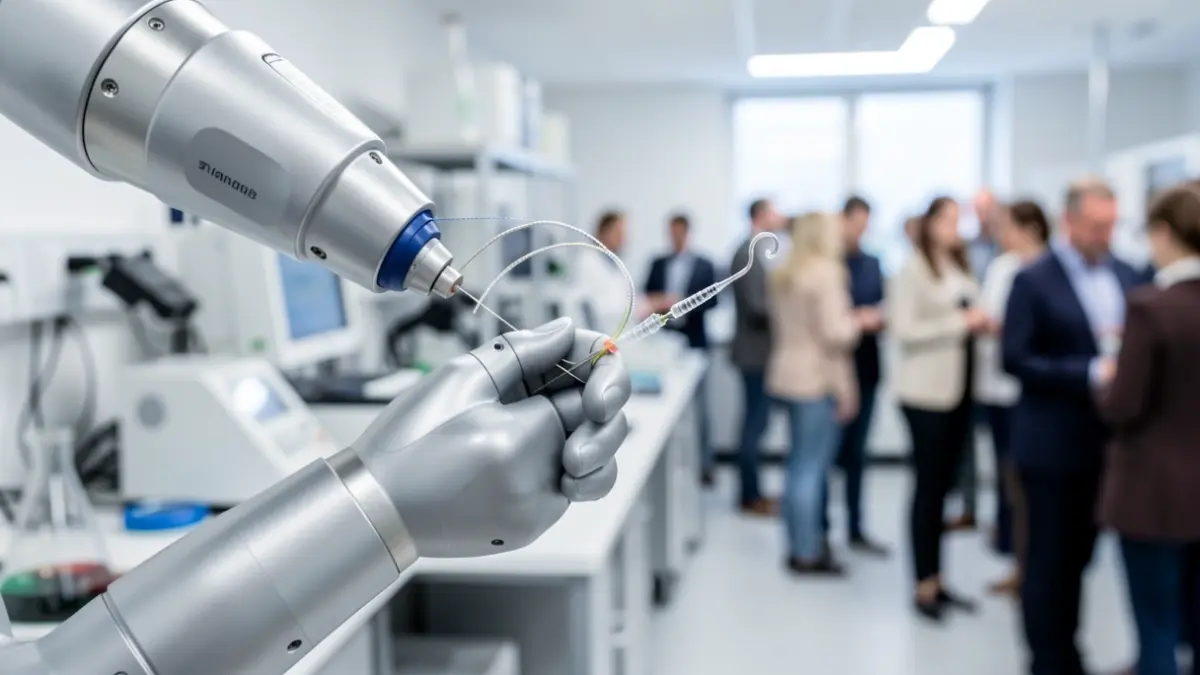
In the AI & Robotics category, Veren Surgical is developing a robotic system for cochlear implants, aiming to reduce trauma during electrode array insertion. The team includes co-founder Daniel Bautista Salinas.
Byte, a startup in the Creative and Consumer category, co-founded by Georgios Koukoulis, is creating a smart mouthguard with embedded sensors to measure head impacts in contact sports, aiding in safer return-to-play decisions.
GenScan AI, founded by Mary-Brenda Akoda, is developing AI software to accelerate MRI scans by up to 90%, potentially reducing hospital backlogs and speeding up diagnoses.
In Energy and Environment, Ryza Bio, founded by Selin Olenik, is developing a discovery platform for novel herbicides by analysing plants' chemical warning signals.
Synaptive, co-founded by Peter Bryan, is presenting an EEG electrode designed to work effectively across all hair types for improved brain activity recording, particularly for those with textured hair.