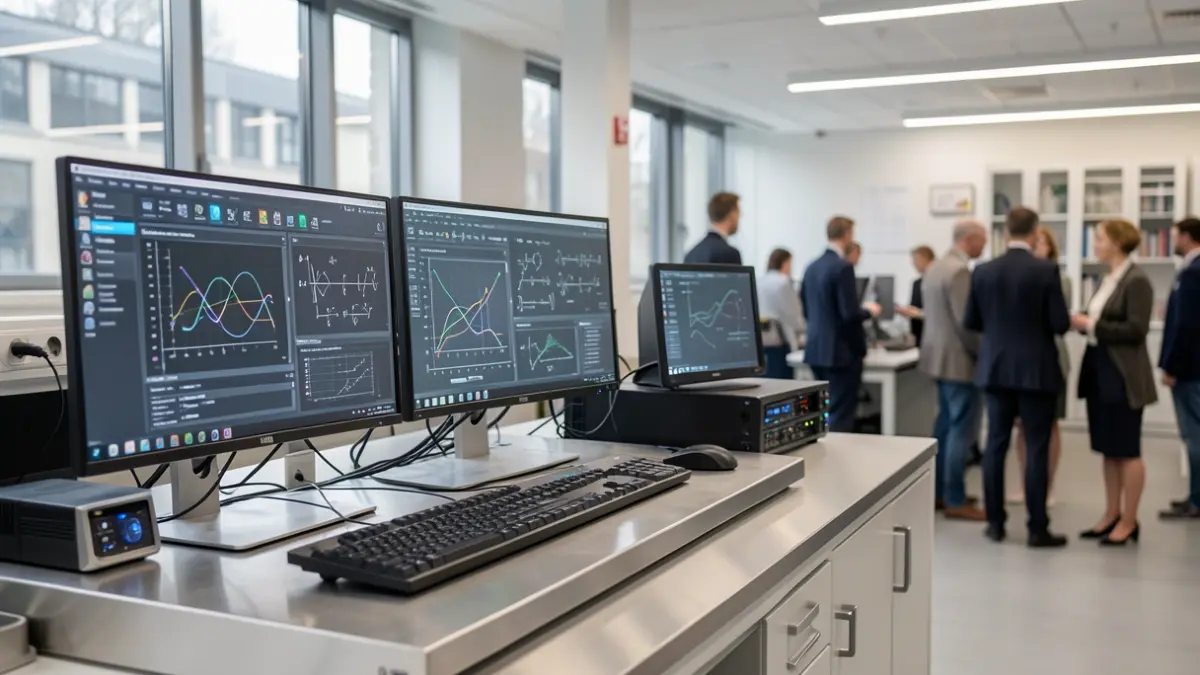
The collaboration will focus on creating a real-time digital representation of systems such as small modular nuclear reactors (microreactors), aiming to accelerate their design, deployment, and operational control. AMPERA specialises in developing these innovative reactors for data centres, factories, and defence applications.
NeuralTwin™ is designed to enhance traditional digital twins by integrating high-fidelity physics simulations with AI surrogates. This approach, drawing on the expertise of Professor Christopher Pain and Dr Jiansheng Xiang from Imperial’s Department of Earth Science and Engineering, will predict the effects of engineering decisions without comprehensive modelling.
Brian Matthews, AMPERA Founder and CEO, stated, “This collaboration will supercharge every aspect of our technology development. Imperial College London is a world-leading university, and the technology has the potential to transform how complex systems are understood, monitored, optimised and managed.” He highlighted NeuralTwin™ as a significant marketplace differentiator.
Professor Christopher Pain expressed enthusiasm for translating academic research into the commercial sector, stating, “We are passionate about translating cutting-edge academic research into the commercial sector where it can accelerate the development of next-generation energy systems.”
Dr Jiansheng Xiang added, “NeuralTwin reflects an important next step in bringing together scientific machine learning, digital twins, and high-fidelity computational methods.” The technology complements AMPERA's use of rapid 3D-printing of reactor cores and a subcritical architecture for enhanced safety.