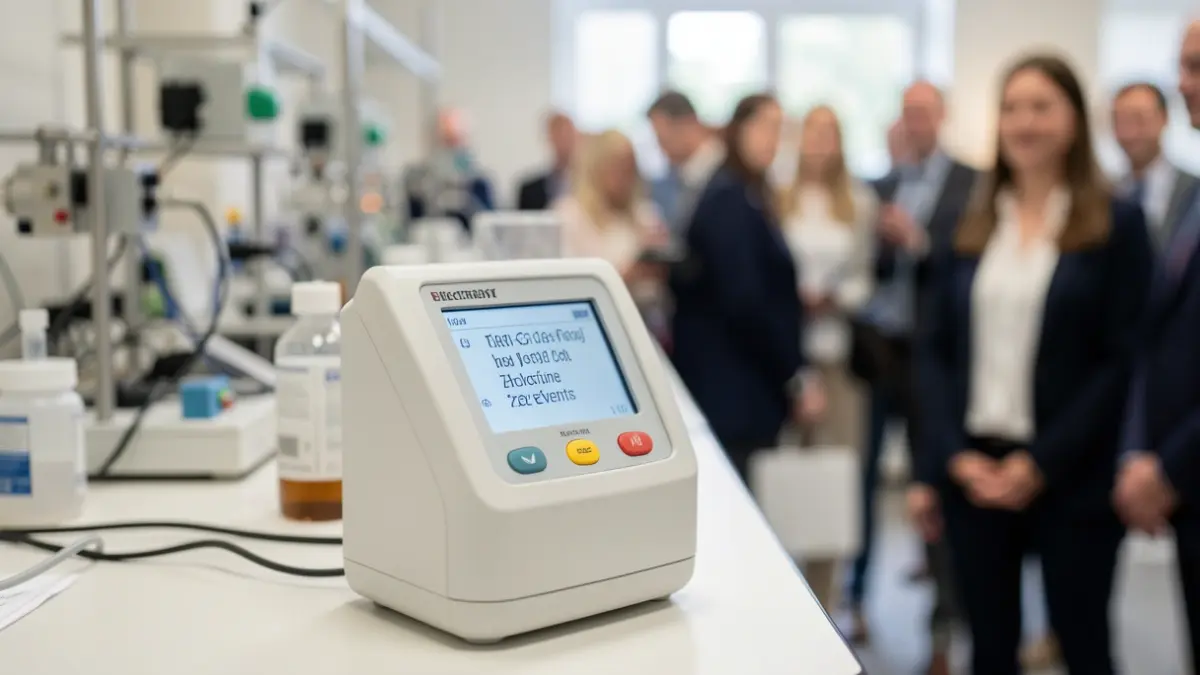
The winning device, created by Kalyb, aims to prevent vaccine wastage due to inadequate cold chains worldwide. The team, comprising Flynn Li, Kaiqi Song, Yubo Gao from the Department of Life Sciences, and Bella Zheng from the Department of Physics, all first-year students, was awarded a £7,000 prize.
Make-A-Difference! is Imperial College London's year-long programme that provides undergraduate students with funded lab placements to develop startup ideas. Run by the Faculty of Natural Sciences, it challenges students to create low-cost technologies addressing real-world issues. Teams gain access to lab resources, funding, and mentorship during an eight-week summer placement.
The judging panel, which included notable figures such as Professor Sir John Pendry and Professor Lord Robert Winston, assessed teams on originality, societal impact, and technical feasibility. Yubo Gao explained the team's motivation: “We believe that this is seriously hindering effective immunisation programmes, especially in parts of the world where they don’t have as many resources.”
The Kalyb team stated, "We started with a simple question: how can a health worker know whether a vaccine froze on its way to the clinic? A frozen vaccine looks exactly the same but may no longer protect the person receiving it. Winning Make-A-Difference! shows that a ~$5 idea from four students can help make sure every child gets a vaccine that actually works. We can’t wait to test it in Nigeria next April."
Team Eviso, who developed a toilet-mounted device for tracking women's urinary biomarkers, were awarded runners-up. Dr Thibault Bertrand, Make-A-Difference! Committee Co-Chair, praised the finalists' creativity and the potential global impact of Kalyb's tracker.
Other finalists showcased innovations such as biodegradable 3D printing filament (EcoPrints), early kidney cancer screening tests (KidniCheck), a vest and app for stroke survivors (OneGarm), and a fire occupant detection system (Primus).
Since 2014, the Make-A-Difference! programme has supported student innovations, including past winners like Multus Biotechnology and Matoha. The 2027 competition is set to launch on 11 November.