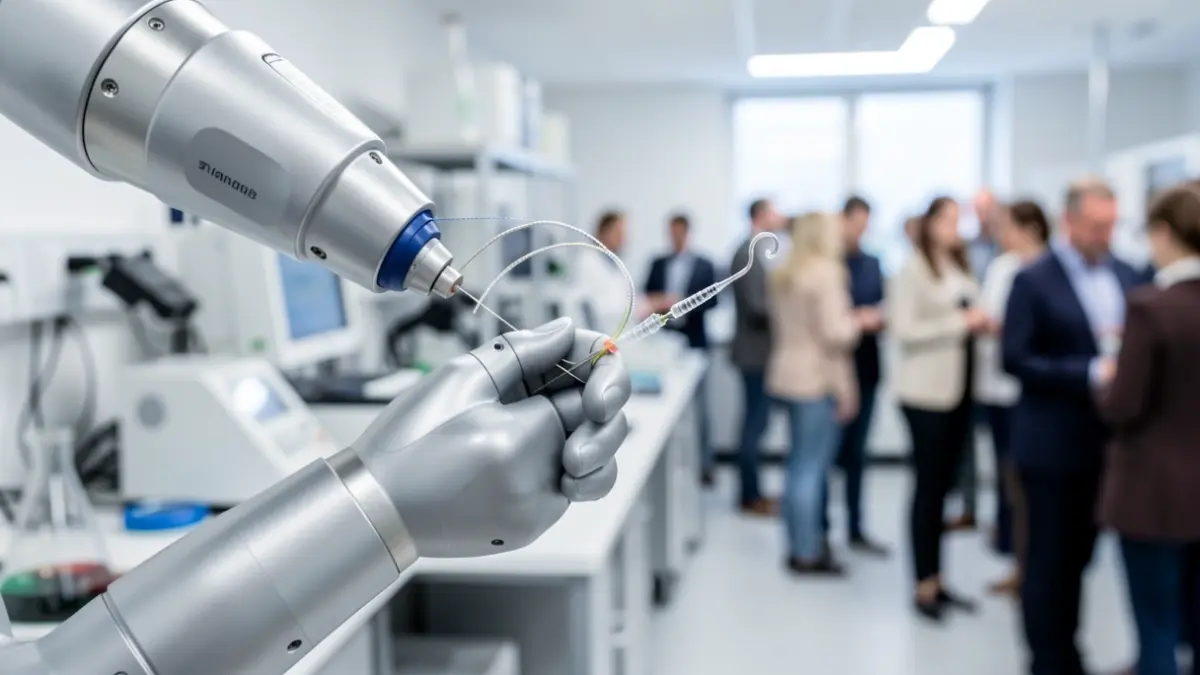
The collaboration will see Anthropic provide token access to various research groups at Imperial, with a particular focus on the Department of Life Sciences. This initiative is part of Anthropic’s AI for Science programme, which supports high-impact scientific projects worldwide.
Professor Peter Haynes, Provost of Imperial, stated that the partnership will provide momentum for the department's ambition in AI-driven biological discovery. He noted that this complements Imperial's Centre for AI-Driven Innovation, established to speed up AI adoption in critical UK sectors.
Professor Daniel Davis, Head of the Department of Life Sciences, highlighted the vast potential of AI in tackling life science problems, including climate change, biodiversity loss, and the development of new treatments for cancer, autoimmunity, and antimicrobial resistance. One ongoing project is exploring new methods to combat fungal pathogens.
Researchers from the Department of Life Sciences, including Professor Doryen Bubeck, Dr Tolga Bozkurt, Dr Nikolai Windbichler, and Dr Jiorgos Kourelis, will use AI to identify how fungal pathogens disable host defences and design protein binders to block these attacks. A method already developed predicts fungal protein interactions with approximately 90% accuracy.
The partnership aims to develop new proteins targeting fungal pathogens, with the long-term goal of creating disease-resistant crops and new human infection treatments. Dr Tiago da Costa is also collaborating with Anthropic to investigate how AI models can aid fundamental discoveries in microbiology, such as understanding antimicrobial resistance and gene transfer mechanisms.
The research will explore AI's capacity to challenge existing scientific assumptions, identify novel biological mechanisms, generate new hypotheses, and design experiments, potentially transforming AI into a genuine scientific collaborator.