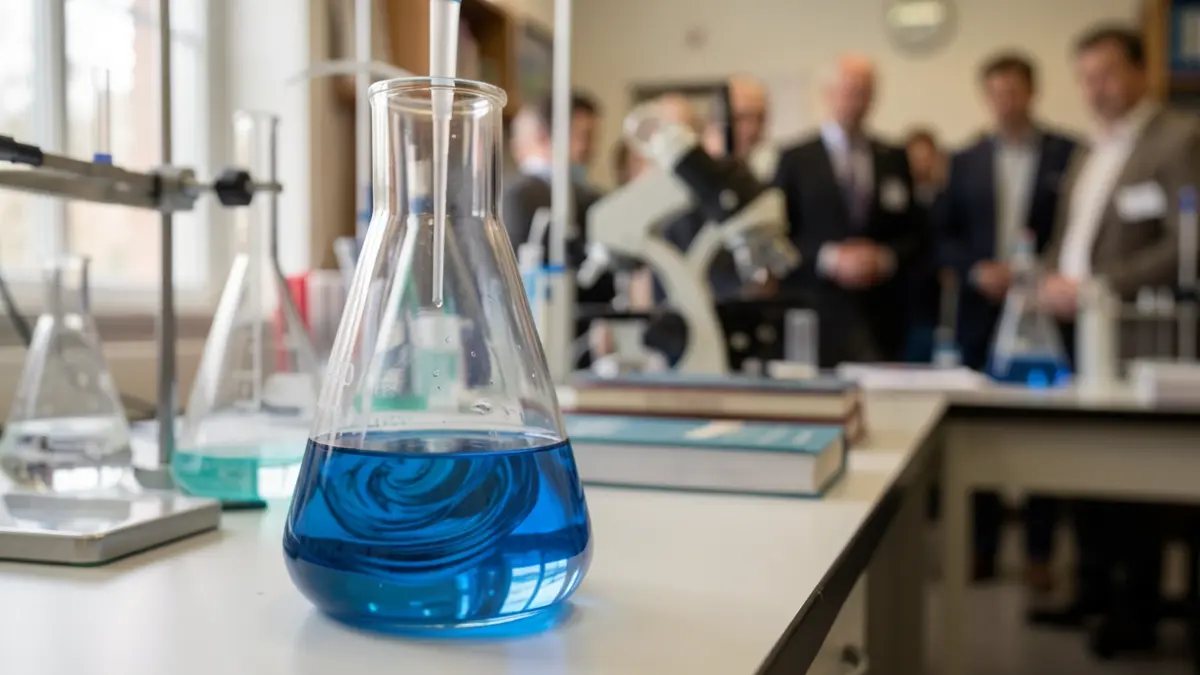
Draghi's project adapted two electrochemistry experiments, originally designed by the RSC, into an escape room format aimed at providing Year 12 A-level chemistry students with an intuitive, hands-on introduction to the subject. The project was trialled with 14 students at Latymer Upper School in Hammersmith, London.
The escape room structure requires students to complete practical tasks and solve puzzles to progress, embodying John Dewey's educational philosophy of 'learning by doing'. Draghi noted a gap in formal research regarding the gamification of science education through escape rooms, particularly for secondary school cohorts, and her project aimed to address this.
Reflecting on her first experience in chemistry education research, Draghi expressed her enjoyment in helping others understand complex concepts, contrasting deep, constructivist understanding with rote learning. She found aligning the practical chemistry experiments, gamified learning principles, and escape room structure to be a significant challenge.
Observations during the trial indicated that many students learned best by directly engaging with the experiments rather than solely relying on theoretical study. Draghi plans to incorporate more scaffolded theoretical information closer to related tasks in future iterations.
Student feedback suggested clear instructions and an engaging activity. Notably, students appeared to connect redox reactions with the thermodynamic concept of spontaneity, a link not typically made at GCSE level. Suggestions for improvement included adding more real-world applications.
Draghi's BSc degree, particularly modules in thermodynamics and reaction kinetics, provided a strong foundation for the project. Practical skills gained from lab-based coursework, such as risk assessment, also proved invaluable. The project has significantly shifted her perspective on learning, reinforcing the idea that 'to think is to act'.
The project is highlighted as an excellent example of undergraduate research connecting chemistry, education, and outreach, showcasing student creativity and insight in designing new learning experiences. Special thanks were given to Mr Ed Forbes for facilitating the activity at Latymer Upper School and the RSC for their microscale experiments.