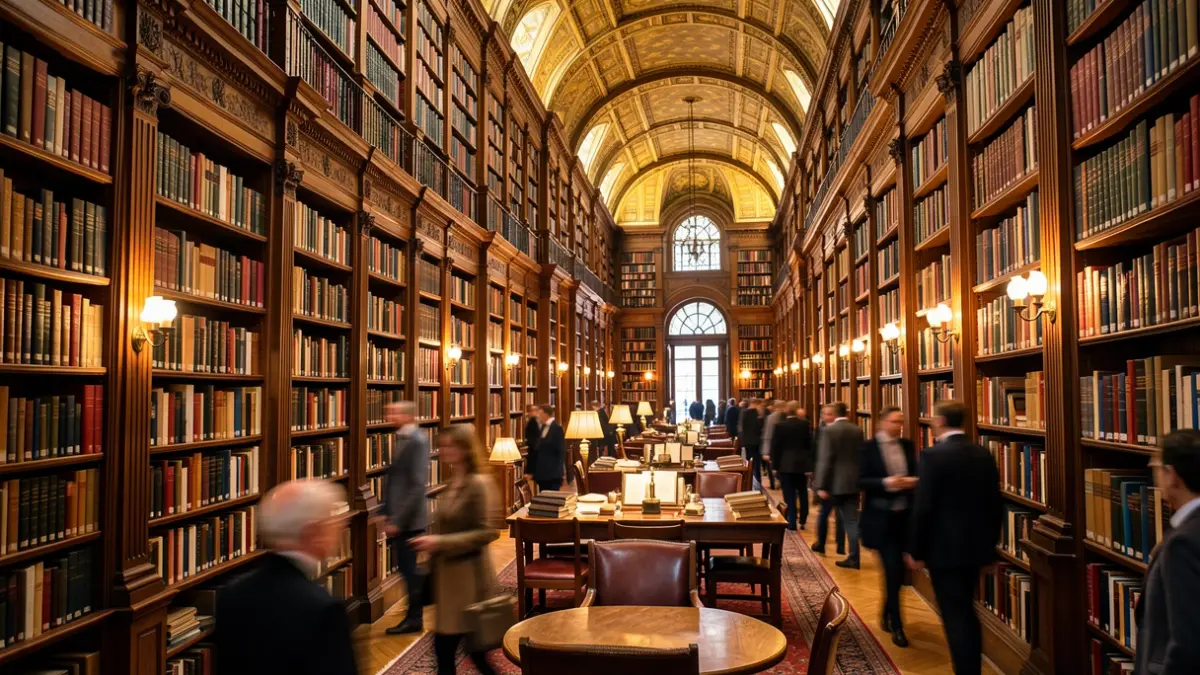
The national library, home to over 170 million items including historical documents like Magna Carta and Shakespeare's First Folio, faces an 'inflection point' in the digital age. Jeremy Silver stated that institutions must evolve to remain relevant, emphasising that while AI can provide answers, it cannot replace the authenticity and trust built over centuries by physical collections.
Despite the enduring value of its collections, the Library is experiencing declining usage in its 11 Reading Rooms as researchers increasingly favour digital methods and require more flexibility. Compounding this, the real-terms value of its Grant-in-Aid funding has decreased significantly over the past decade, leading to a projected deficit. The Library anticipates expenditure will exceed income for the next two years.
To counter these challenges, the British Library has chosen modernisation over decline. Plans include repurposing three Reading Rooms for science and social sciences into a new, flexible workspace. These services will be relocated to other Reading Rooms, maintaining specialist support. The strategy also involves opening up more workspace and storage facilities to commercial use to diversify income streams.
The new strategy, 'Growing Knowledge', aims to make better use of its physical estate in London and Yorkshire, improve onsite and digital access, and adapt to future usage patterns. The goal is to reinvest in collections, buildings, and people while ensuring core services and access to knowledge remain free.
Silver acknowledged the risks associated with change but stressed that the greater risk lies in remaining static. The Library's core purpose of preserving knowledge, expanding access, and inspiring discovery remains unchanged, with modernisation now being integral to that mission.
A version of this article by Jeremy Silver was originally published in The Times on 21 October 2026.