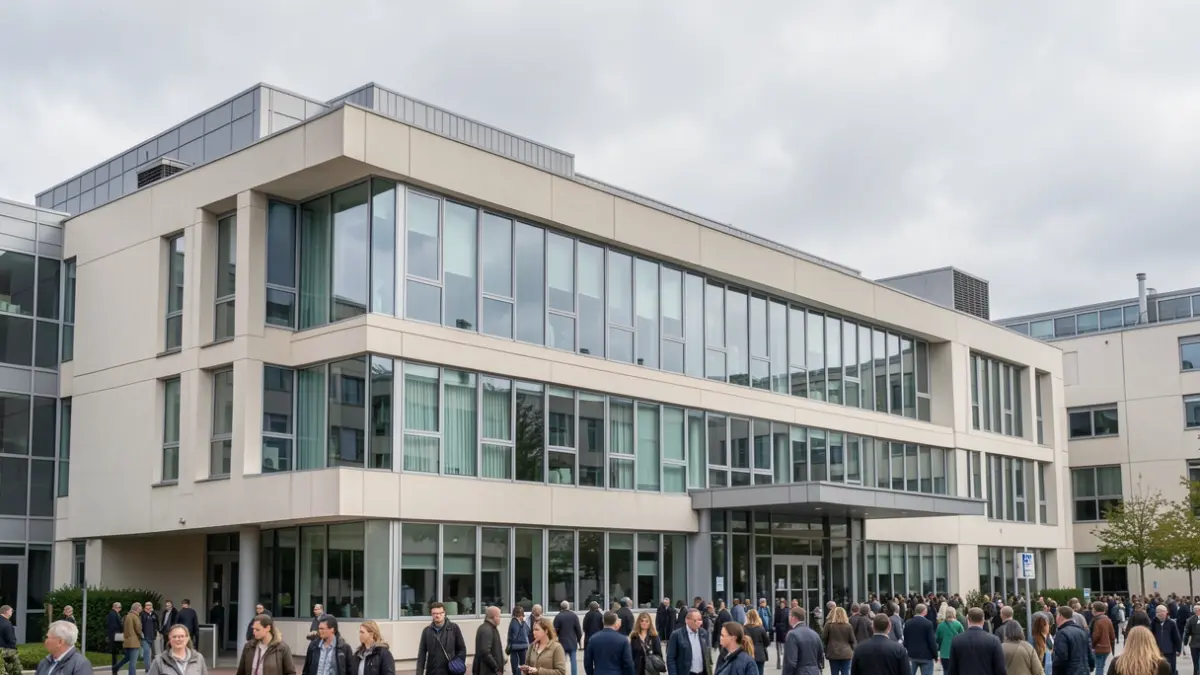
St Mary’s Hospital is marking the upcoming phase of its redevelopment by honouring past pioneers who have significantly contributed to medicine and society. The trust is currently in the third phase of consultation for a new St Mary’s facility, aiming to create a state-of-the-art teaching hospital and major trauma centre.
The redevelopment aims to transform the entire site, creating a vibrant life sciences campus expected to bring new jobs and investment to the local community. A planning application for the site is anticipated in spring 2027. The trust is inviting further feedback on its latest proposals.
“"I'd rather be remembered for my work in neurology than my running. If you offered me the chance to make a great breakthrough in the study of the autonomic nerve system, I'd take that over the four-minute mile right away."
Among the celebrated figures is Sir Roger Bannister, the first person to run a mile in under four minutes while studying at St Mary’s Hospital. Despite his athletic achievement, Bannister expressed greater pride in his career in medicine and neurology.
Dr John Alcindor, a respected GP, researcher, and community leader, studied medicine at St Mary’s. He made significant contributions to the understanding of influenza and tuberculosis, cared for soldiers in World War I, and advocated for racial equality. A blue plaque in nearby Little Venice commemorates his life.
Professor Dame Averil Mansfield, the UK’s first female professor of surgery, had a distinguished career spanning over four decades at St Mary’s. She championed equality in medicine, founding Women in Surgical Training and influencing national organisations. Her legacy continues to inspire future medical professionals.
Sir Alexander Fleming, who enrolled at St Mary’s Medical School in 1901, discovered penicillin in his laboratory at the hospital in 1928. This groundbreaking discovery revolutionised the treatment of bacterial infections and has saved millions of lives globally. He was knighted in 1944 and received the Nobel Prize in Physiology or Medicine in 1945.
The trust believes the new St Mary’s will provide future generations with the opportunity to build on this legacy of innovation and discovery, transforming healthcare for decades to come. Residents can share their views on the redevelopment plans before the consultation closes on 31 October.