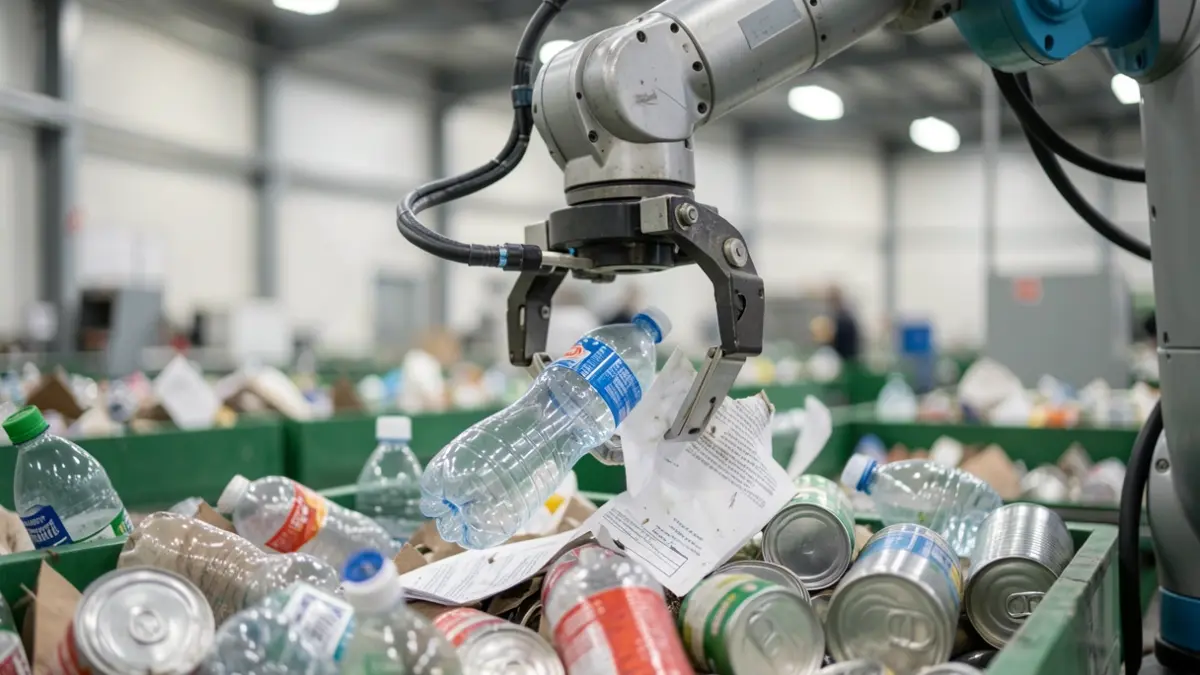
The new facility will test and refine robotics systems designed to sort waste more quickly and accurately, ultimately conserving resources and enhancing recycling efforts across the country. This initiative is also expected to generate skilled employment opportunities, speeding up the adoption of automation within a complex industrial sector.
Initial financial and business support from the Royal Borough of Kingston upon Thames Council was instrumental in securing £3.6 million in funding from Innovate UK. The project was brought to fruition through a collaboration between Kingston University and local start-up KAPDAA, facilitated by the Kingston Green Business Community.
“"Kingston continues to show how collaboration between local authorities, universities and the private sector can drive innovation and solve major environmental challenges. The hub will not only put Kingston at the centre of green-tech innovation, but will also help build a cleaner, more sustainable future for communities across the country while reducing waste management costs of local authorities."
“"The National Waste and Recycling Robotics Adoption Hub will help UK recyclers move proven robotics from the lab into live operations, keeping valuable materials out of landfill, cutting carbon emissions, creating skilled jobs and accelerating the circular economy."
Despite over a decade of technological advancement, fewer than 5% of UK waste facilities currently employ automated sorting systems. The hub aims to support over 150 organisations by 2030, providing performance benchmarking, tailored training, and a national evidence base that can be replicated in other complex industrial and manufacturing sectors.