New analysis from the European Space Agency’s Rosetta mission is shedding fresh light on the plasma environment surrounding Comet 67P. The mission, which ended with a controlled descent onto the comet's surface on 30 September 2016, was the first spacecraft to orbit a comet and accompany it on its journey around the Sun.
During its two-year escort, Rosetta collected a vast dataset on the comet’s composition, structure, and interaction with the surrounding space environment. Imperial researchers from the Department of Physics played a key role, working on the Rosetta Plasma Consortium (RPC). Chris Carr, Principal Investigator, stated, "Imperial's Space Magnetometer Laboratory built the power and data-processing electronics which operated the 5 sensors of the RPC, which was designed to study the plasma environment around Comet 67P."
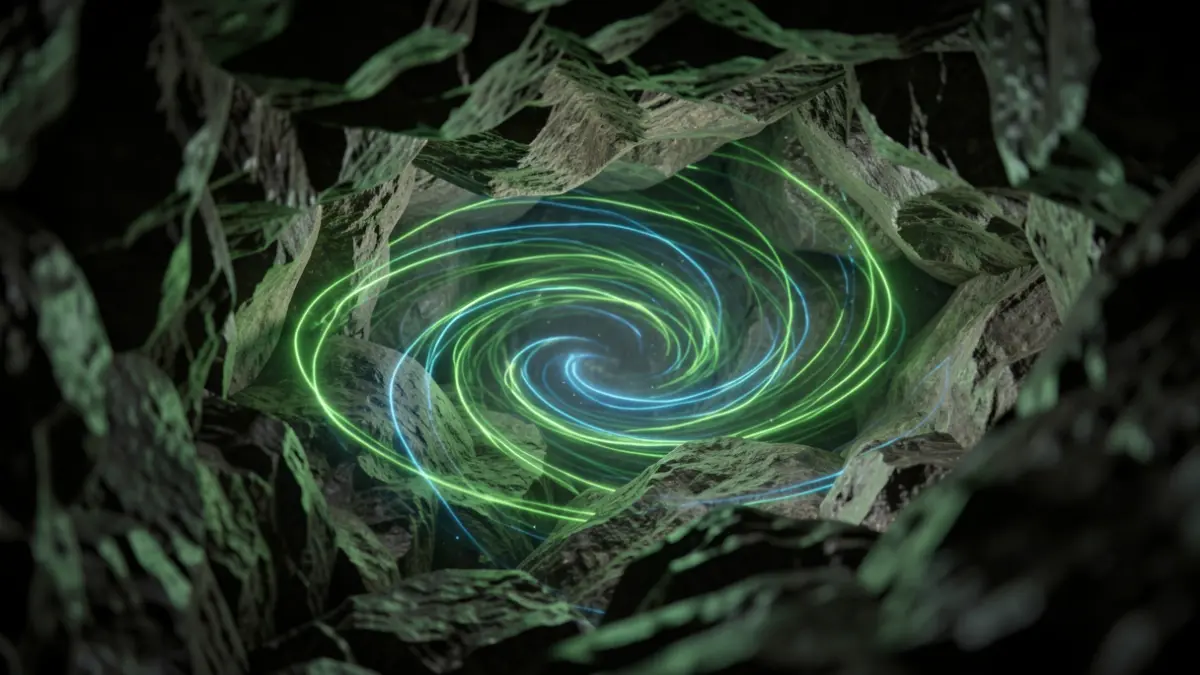
Using data from these instruments, scientists tracked how the cometary plasma, the ionised part of the comet’s escaping atmosphere, evolved as the comet travelled from beyond Earth’s orbit to its closest approach and back. Scientists were also associated with ROSINA, which studied the composition of gases released from the comet, revealing how it interacted with the solar wind.
A recent study, led by Imperial PhD student Victor Steinwand and published in Monthly Notices of the Royal Astronomical Society, revisits observations from the spacecraft’s final year. By combining Rosetta measurements with advanced simulations, the team investigated how charged particles behaved during a phase known as weak outgassing, after the final detections of a diamagnetic cavity.
“"The Rosetta mission returned an amazingly rich dataset of the cometary environment over a range of outgassing. Exploiting this multi-instrumental dataset over the past years using physics-based models has allowed us to start building a self-consistent picture of the processes at play in this natural plasma laboratory."
The findings help explain observations that could not be interpreted when the mission ended in 2016, providing a more complete picture of the interaction between the comet and its surrounding space environment. Victor Steinwand commented, "This study not only explains the observed ion dynamics but also provides a consistent thread that ties together all of the previous studies of Rosetta plasma observations under weak outgassing conditions."
Imperial researchers are now contributing to ESA’s next-generation Comet Interceptor mission, building on the expertise developed through Rosetta. Professor Marina Galand, who leads the magnetometer on probe B2 of Comet Interceptor, added, “With a currently unknown target, it is key to test our plasma models against the dataset returned from past cometary missions, such as Rosetta, and improve an understanding of the solar wind-comet interaction over a range of outgassing. A magnetic-field free region, formed around the cometary nucleus, remains however, so far, largely a puzzle, which probe B2 may be able to help solve.”