The prestigious award recognises work that has fundamentally transformed scientists' ability to study some of the Universe's most extreme environments. By observing high-energy neutrinos that travel from distant cosmic sources, the IceCube observatory has established neutrino astronomy as a new field, offering a unique lens through which to explore the cosmos.
Unlike traditional astronomy, which relies on electromagnetic radiation such as visible light or X-rays, neutrinos offer a different perspective. Due to their minimal interaction with matter, these particles can traverse vast cosmic distances undisturbed, carrying vital information from otherwise hidden regions. Halzen's vision in 1988 proposed using the transparent glacial ice at the South Pole as a detector, a concept that led to the creation of IceCube.
This groundbreaking experiment transformed a cubic kilometre of Antarctic ice into a sophisticated scientific instrument. It is capable of capturing the extremely rare interactions of these elusive particles, thereby laying the groundwork for neutrino astronomy. As stated by Dr Patrick Dunne from Imperial’s Department of Physics, "Detecting neutrinos from astrophysical sources opens up a new lens, so it isn't overstating things to liken this to when Galileo first pointed a telescope at the stars."
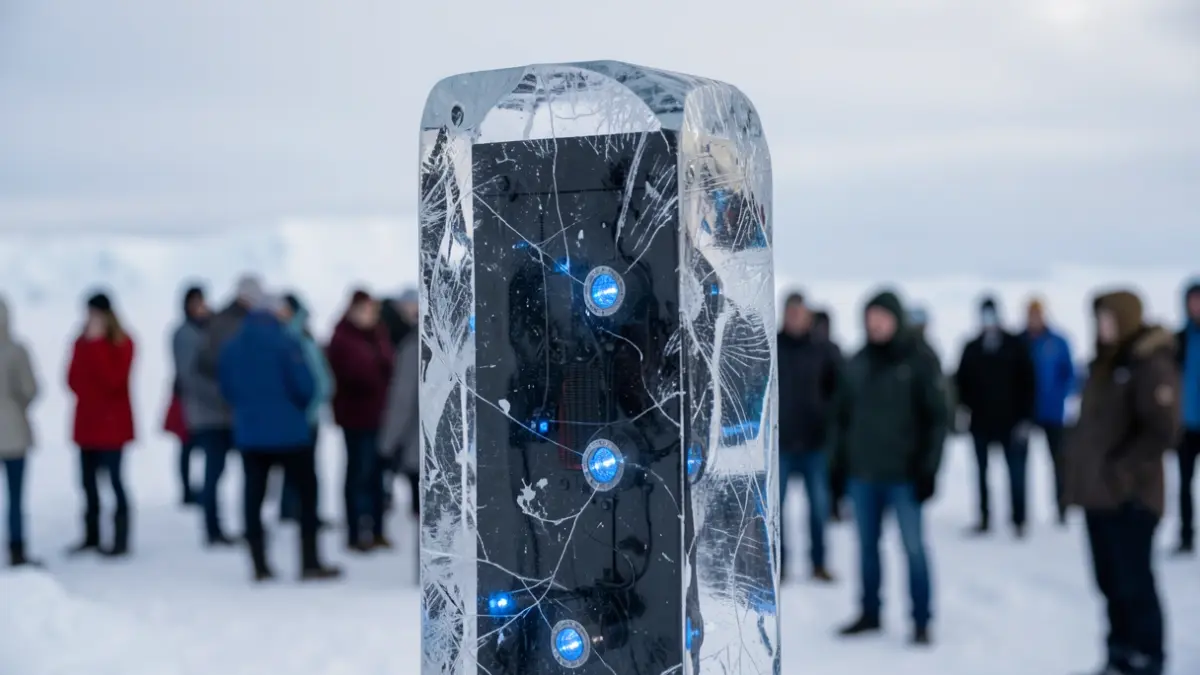
The IceCube observatory, built deep within the Antarctic ice, employs thousands of light sensors. These sensors detect the faint flashes produced when neutrinos interact with matter. The observatory achieved its first detection of high-energy extraterrestrial neutrinos in 2013 and later identified the first known source of these particles, solidifying neutrino astronomy's place in scientific research.
Dr Patrick Dunne further elaborated on the significance of neutrinos, noting their potential to reveal fundamental aspects of the universe and advance our understanding of basic science. He also mentioned ongoing terrestrial experiments like DUNE and Hyper-Kamiokande, which aim to study neutrinos in greater detail.
Imperial College London has a sustained involvement in neutrino research. Recent projects include studies of cosmic neutrinos within dark matter detectors, searches for hypothetical sterile neutrinos, and participation in major international collaborations. Professor Stefan Söldner-Rembold, Head of the Department of Physics at Imperial, highlighted that IceCube's observations are ushering in a new era of multi-messenger astronomy.
Professor Söldner-Rembold added, "The Nobel Prize awarded to Francis Halzen recognises his vision and determination in creating this unique experiment and bringing together a major international collaboration. It is also a recognition of the field of astroparticle physics and of the vital role neutrinos play in helping scientists address some of the Universe’s deepest mysteries."
Imperial researchers are also involved in next-generation experiments such as the Deep Underground Neutrino Experiment (DUNE) in the United States and Hyper-Kamiokande in Japan. These projects aim to answer key questions about neutrinos, including their transformation during travel and their potential role in explaining the dominance of matter over antimatter in the universe. These experiments will also detect neutrinos from supernovae, offering insights into violent cosmic events.