Second-year BEng Mechatronics and Robotics students Dwij Sampat and Neel Vashi claimed the Gold medal, designing, programming, and setting up robotic systems to perform manufacturing tasks against the clock. Denis Kerxhaliu and Dogu Muhurdaroglu won Silver, while Jay Nii-Addy and Peter Zekry took Bronze.
The finals, held in South Wales, featured over 400 finalists across 47 disciplines, highlighting the technical skills essential for modern workplaces. Dwij expressed delight, stating, “We’re delighted to have won Gold; it has made all the hard work worthwhile. We have benefitted from the first-hand experience, learning about industry regulations, keeping professional standards, and developing an understanding of engineering processes. It's been a real bridge between classroom learning and the realities of working in industry.”
Neel added, “It’s fantastic to win Gold in such a prestigious competition. The training has been intensive, involving 12-hour days, but we've learned transferable skills that I can take into a range of industries. We've had to think carefully at every stage, from checking safety and programming the robot to making sure everything works properly.”
In the Automation competition, part-time Middlesex BEng Mechatronics and Robotics student Nick Makatsaria and BEng student Santiago Strajijar won Silver. They represented London Design & Engineering UTC, where Nick is employed. Middlesex University also organises national competitions in Automation, Mechatronics, Industrial Robotics, and Laboratory Technician.
Overall, teams from Middlesex University were placed joint sixth in the national medals table. Students also competed in the Industrial Electronics and Laboratory Technician UK Finals, with BEng Electronic Engineering student Jack McMurray representing the university in Industrial Electronics and BSc Pharmaceutical Science student Samanta Gazi in the Laboratory Technician contest.
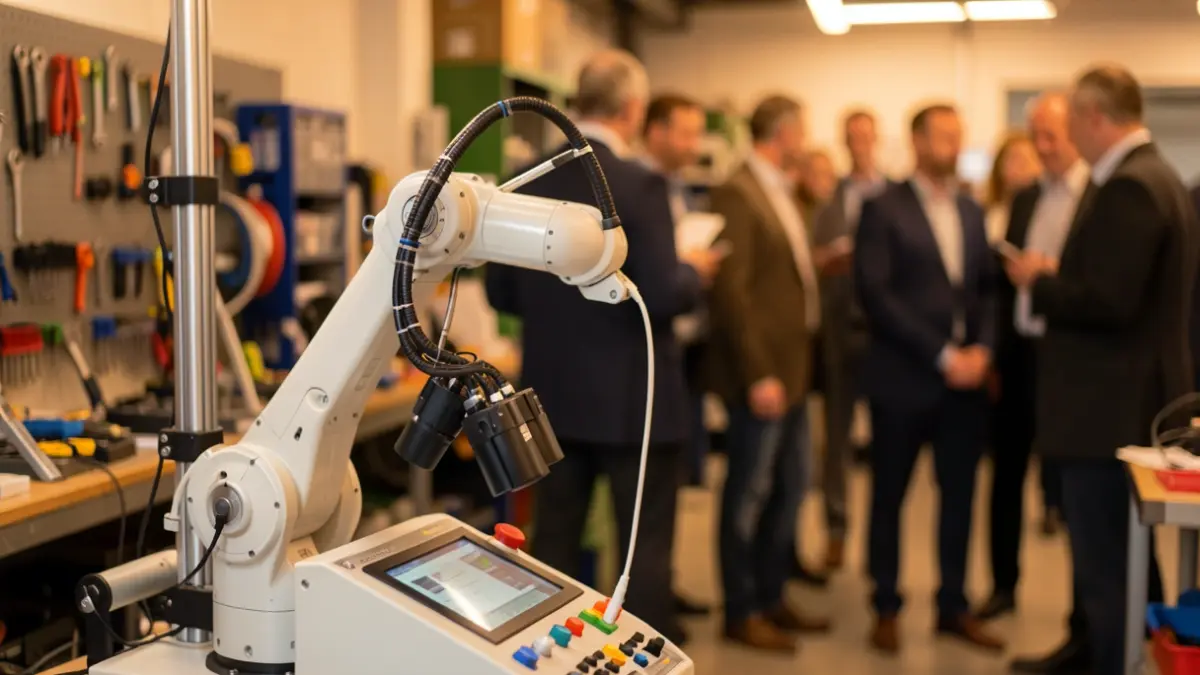
The Industrial Robotics challenge required competitors to build and programme a small automated manufacturing system for chocolate packaging within a simulated food-industry mini-factory. This involved connecting a robotic arm to sensors and control systems, and programming it for a simulated factory task. Judging criteria included system functionality, problem-solving, fault fixing, and safety.
Neel managed the software, programming robot movements, configuring the cell layout, and setting up sensors and vision systems, while Dwij focused on the hardware, building and wiring the system, fitting tools, and ensuring operational readiness. Their preparation, which began last December, involved intensive training with industrial FANUC robots and equipment valued up to £30,000, with students dedicating up to 30 hours per week.
Middlesex University alumni Pratham Lohia and Jason Scott, former WorldSkills global competitors, assisted in training and marking. Pratham, now pursuing a Masters in Robotics at Middlesex, noted the advantage of programming FANUC robots for career prospects and shared his experience transitioning from competitor to trainer.
Karla Kosch, WorldSkills UK Training Manager in Robot Systems Integration and a Lecturer in Robotics at Middlesex University, highlighted the importance of practical, hands-on learning in the university's Mechatronics and Robotics degree programmes, combined with WorldSkills competitions, for developing essential employability skills. She praised the next generation of talent stepping onto the national stage.
Middlesex University maintains a long-standing partnership with WorldSkills UK. Professor Mehmet Karamanoglu, former Head of Design Engineering and Mathematics, has devised the Automation and Mechatronics competitions annually. The university acknowledged support from industry partners and sponsors, including Didactic Services Limited, Festo, Amazon, Fanuc, Enginuity, Omron, and Underwoods.