King's College London Researchers Uncover Vast Unexplored Viral World in Human Gut
New research identifies over 116,000 viral groups, potentially influencing conditions like Irritable Bowel Syndrome (IBS).
By Daniel Okafor
••3 min read
AI
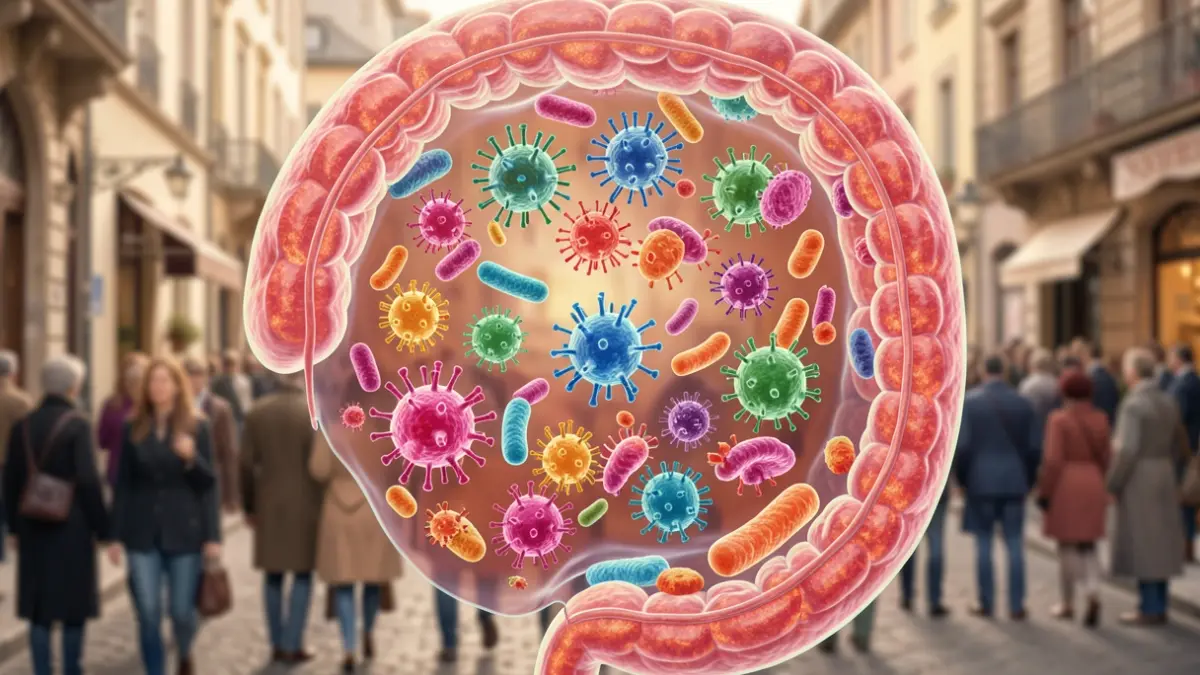
Generic image of microscopic viral particles and bacteria in the human gut.
Scientists from King's College London, Helmholtz Munich, and the University of Nottingham have characterised a vast and largely unexplored community of viruses, known as bacteriophages, within the human gut.
The human gut microbiome harbours an enormous, largely unstudied world of viruses that could provide crucial insights into the gut ecosystem's function. New research has mapped this extensive viral community, connecting its viral, bacterial, and metabolic components, which are known to influence health and conditions such as Irritable Bowel Syndrome (IBS).
While research into the gut microbiome has historically focused on bacteria, the vast population of viruses, particularly bacteriophages (viruses that infect bacteria), remains poorly understood. The study, published in Nature Communications, identified over 116,000 viral groups in the gut, with more than 99% having no close match in existing catalogues, underscoring the extent of unexplored viral life within the gut.
By analysing genetic material from stool samples, researchers examined the co-occurrence and abundance of viruses and bacteria. They observed consistent patterns, with certain viruses appearing more frequently alongside particular bacteria, while others were less common. Data from over 1,000 TwinsUK participants, the UK's largest Twin Registry, revealed that environmental factors significantly shape the gut viral community, although genetics also contributes to viral diversity, explaining approximately 47% of the variation.
A small group of viruses carrying genes linked to harmful bacterial behaviour were identified. These viruses were more prevalent alongside bacteria that can cause infections and less common with bacteria involved in dietary fibre breakdown. While not directly causing disease, this suggests an association with less favourable gut bacterial communities. Differences in the microbiome are thought to influence conditions like IBS, which affects about 10% of the population.
A second study, published in Gut, identified 50 gut viral groups associated with IBS, with many being less abundant in individuals with the condition. Altered relationships between bacteria and viruses, particularly those infecting bacteria already linked to IBS, suggest that the condition may involve changes in the organisation of the wider gut microbial community, not just bacterial shifts. This offers a new perspective on IBS and could aid in developing better biomarkers and treatments.
“
"Our research highlights that to fully understand the gut microbiome and its links to health and disease, we need to look beyond bacteria and consider the viruses that live alongside them. We reveal a fascinating and largely unexplored dimension of the gut microbiome – discovering that viruses are not only closely associated with bacterial communities, but also with the metabolites that connect the microbiome to our health. This opens exciting new avenues for understanding how the gut ecosystem works."
“
"The study is observational, so it cannot show that the viruses cause these effects, but it provides greater understanding of a largely unexplored area of the human gut. It would also be beneficial to replicate the study on a more diverse cohort, as participants were mostly older women of European ancestry."
“
"For a long time the viral part of the gut microbiome has been a kind of dark matter: we knew it was there but couldn’t see it. Advances in sequencing and computational methods mean we can now start to map it properly, and this study shows just how much has been hidden."
Future research will focus on understanding whether these viruses actively influence bacterial metabolism and how their relationships with bacteria change in different health and disease states, potentially contributing to more personalised gut health approaches. This research was funded by the Chronic Disease Research Foundation (CDRF) and in part by the Wellcome and Medical Research Council (MRC).